


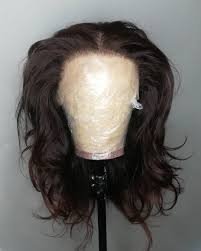
There is a particular kind of frustration that every wig wearer knows. You spent the money. You did your research. You watched the tutorials. And yet something about the way your unit sits is just not right. Not quite polished. Not quite convincing. Not quite you.
Here is the truth that the beauty industry has been slow to say out loud: the problem is almost never the wig itself. It is everything that happens after the wig leaves the packaging.
The Hairline Is Always the First Confession
Walk into any beauty editor’s office and ask her what gives away a wig and she will tell you the same thing every time. The hairline. A natural hairline is beautifully imperfect. It recedes slightly at the temples, it has fine baby hairs at the perimeter, it has variation in density that the eye reads as real without ever consciously registering why.
A factory hairline is none of those things. It is uniform, it is dense, and it sits in a perfectly straight line across the forehead. The brain does not know exactly what is wrong but it knows something is.
The correction is customisation. Plucking at the hairline, bleaching the knots, laying the perimeter with the right tools for your specific face. When it is done well, and done for you specifically, the transformation is not subtle. It is complete.
A Stark Part Is a Story Nobody Wants to Tell
The part is where so many otherwise beautiful units fall apart. A bright white or unnaturally pale part reads as synthetic regardless of how expensive the hair actually is. Real scalps have pigment, texture, dimension. A part that looks painted on disrupts every other element of the look.
The correction is almost embarrassingly simple. Parting powder. Tinted dry shampoo. A touch of concealer in the right shade. Applied correctly, these products close the gap between wig and scalp in a way that even close inspection struggles to detect.
Texture Does Not Just Age. It Gets Neglected.
This is the conversation that needs to happen more in beauty spaces. Wig texture does not deteriorate on its own timeline. It deteriorates on your maintenance timeline. Human hair units that are not receiving regular moisture treatments become dry, brittle, and prone to tangling. Synthetic units that are not being cared for lose their pattern and their movement.
The moment a wig loses its texture, no product from a beauty supply shelf is going to restore it. That work requires professional hands, the kind of expertise that understands the specific needs of a unit that has been worn and washed and lived in. Restoration is not a last resort. It is a skill.
Uneven Density Is the Detail That Changes Everything
Shedding is inevitable. But the way shedding manifests, with certain sections thinning while others stay full, creates an unevenness that is almost impossible to disguise through styling alone. It is the kind of detail that a camera picks up before you do.
Density restoration is one of the most requested services among serious wig wearers and for good reason. Addressed professionally, it can extend the life and the look of a unit significantly. It is not about replacing what is lost. It is about rebalancing what remains.
The Install Was Never Made for Your Head
Wigs are manufactured for a generalised head. You are not a generalised head. When a unit is not properly fitted to your specific shape, your specific hairline, your specific lifestyle, it shifts. It gaps. It lifts at the temples during a long day. The movement gives everything away.
A professional fitting is not a luxury. It is the difference between wearing a wig and wearing your hair. The personalisation is where the magic actually lives.
The takeaway is this: a wig that is not working for you is almost certainly a wig that has not been worked on enough. The potential is almost always still there.